

Will Your Party Be My Party? What We Learnt From the Conference
Dr North discusses Your Party conference and what he learnt from it.
The establishment of Your Party arrived at a politically expedient moment. Labour are struggling to establish a clear vision for their politics and are sinking in the polls. The public are calling out for left-wing alternatives to address the grotesque level of wealth inequality. The Green Party have somewhat filled this gap (which we have covered extensively) and because of this are shooting up in the polls. However, as we found at Your Party conference, there are many working-class voters who are not convinced by The Greens and feel it is not a truly representative movement.
We spoke to Nathan, a primary school teacher from London. Nathan told us that his experience of the Green Party was that it was primarily White people and for this reason, he fairly felt it did not represent him. I believe this is where Your Party’s can fulfil a political gap.
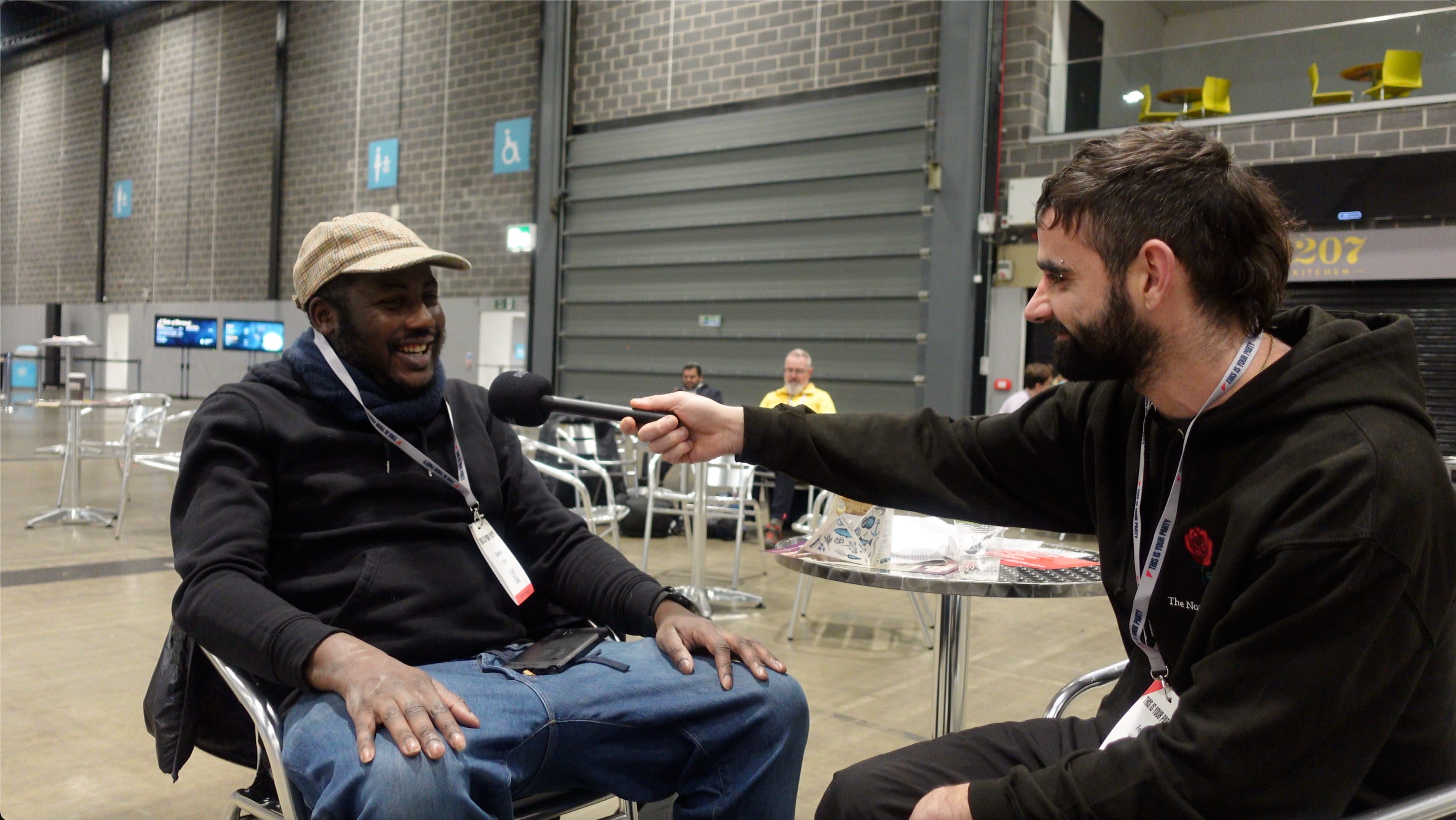
This is not to say that the Greens are not representative because the leadership under Zack Polanski, Rachel Millward, and Mothin Ali is one of the most widely diverse political leadership teams we’ve ever seen — and they are working to increase the party’s representation. However, perceptions are not easily changed, and Your Party can benefit from this.
Your Party consists of a range of diverse MPs and members who clearly come from working-class backgrounds. This perception has been secured by the hostility directed towards MP Adnan Hussain who is a landlord — and eventually left Your Party because of the attacks and “persistent infighting” in the party. So, Your Party can win voters who may instinctively be suspicious of the Greens commitment to working-class issues, and want politicians they genuinely feel represent them.
Additionally, Your Party members voted for collectivised leadership and are building a party that is more interested in sharing power among members, rather than concentrating power in the hands of the leaders — which is a good idea based on the current leadership drama. There is a lot to like about a party that distributes power more equally among its base. However, we got the sense that there is not enough policy to differentiate Your Party from the Green Party, so what could they do to sharpen the distinction?
The Greens are winning the narrative on cost of living and have successfully captured those who want to see wealth inequality engaged with. So, my suggestion is that Your Party focus on representation and issues like Proportional Representation (PR). PR is popular among the public and the Greens also support this change — they just haven’t made it central to their current messaging. One strong central message can be incredibly effective, and I believe Your Party can garner support if they improved their comms game.
Ultimately, having more parties on the left is not a bad thing — as Shockat Adam told us in an interview at the conference — but if these parties do not differentiate themselves, then they may end up confusing voters.
Your Party share many of the Green’s values on redistribution, so they need to pursue other issues that are politically salient. Zarah Sultana has repeatedly attempted to stake out ground by arguing that both parties have different stances on NATO and the EU, but these issues are not popular among the public at the moment.
Your Party has potential, but potential alone won’t define its future. The party must sharpen its purpose and speak directly to the working-class voters who feel politically homeless. Representation, collectivised leadership, and a genuine commitment to shared power are not just branding points, they are the foundations of a movement that could resonate where others have struggled.
But clarity matters. Messaging matters. And distinctiveness matters most of all.
If Your Party leans into what makes it unique — its rootedness in working-class experience, its internal democracy, and its opportunity to make PR as a defining cause — then it can occupy space the Greens have not yet fully claimed. Not as a rival, but as another voice in a broader political ecosphere that is finally beginning to challenge inequality with imagination rather than exhaustion.
Whether Your Party becomes a meaningful force will depend on whether it chooses to be bold, coherent, and unmistakably itself. The appetite for change is already there. The question is who will earn the trust to deliver it.