Today the World Inequality Report 2026 was published and, unsurprisingly, the report detailed the shockingly high levels of inequality across the world. Let’s discuss the key takeaways.
1. Wealth inequality is out of control
The wealthiest 0.001%, which consists of fewer than 60,000 multi-millionaires, possess more wealth than half of the global population combined, as the figure below shows.
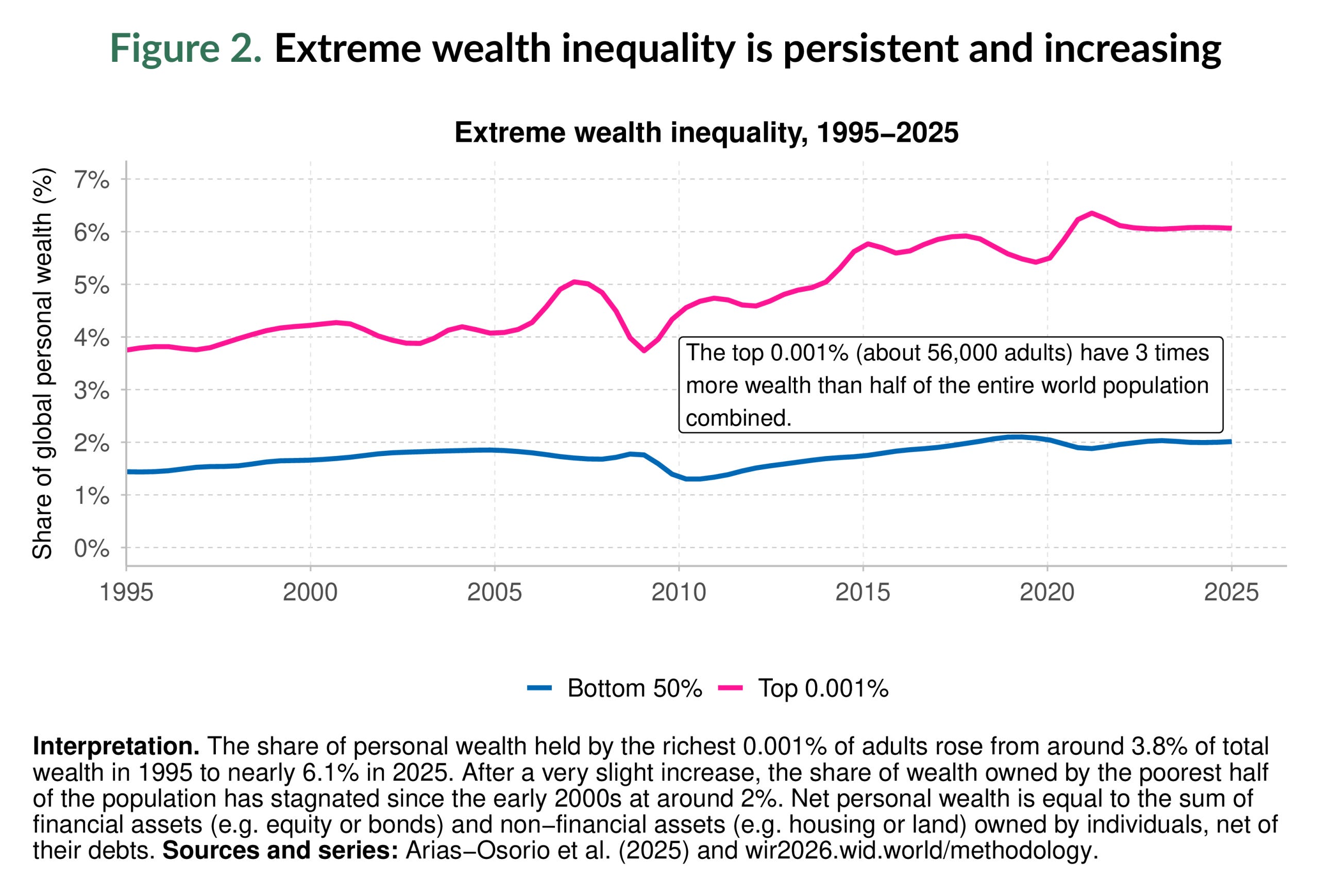
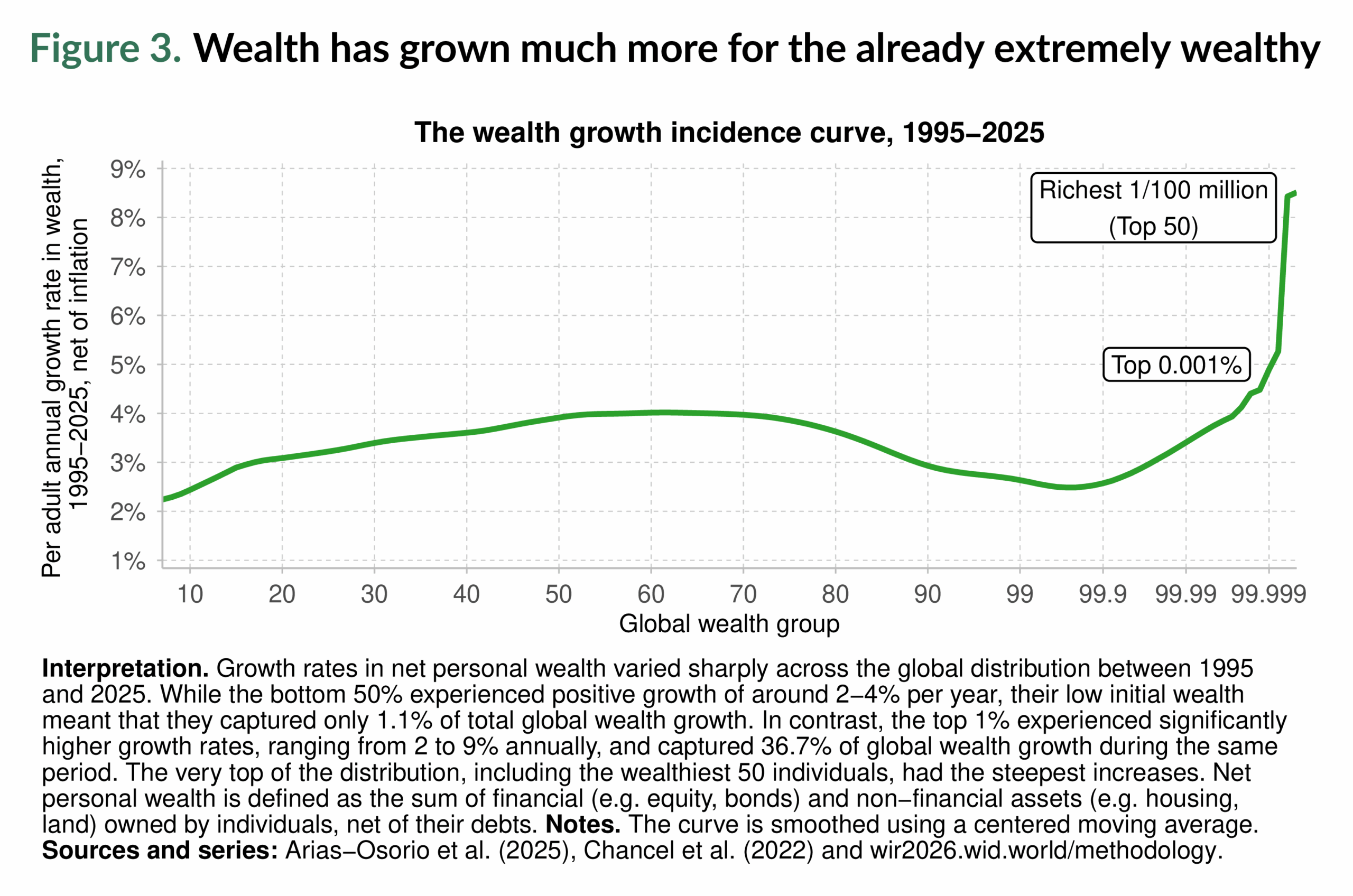
The growth in wealth inequality is accelerating and will continue to accelerate if nothing is done.
Inequality is more prevalent in the global south, where populations often earn far less than counterparts in the global north.
An average person in North America & Oceania earns about thirteen times more than someone in Sub-Saharan Africa and three times more than the global average.
Yet, in most regions, the top 10% typically own more wealth than the bottom 50%, demonstrating that inequality is severe in most countries.
2. Women earn less
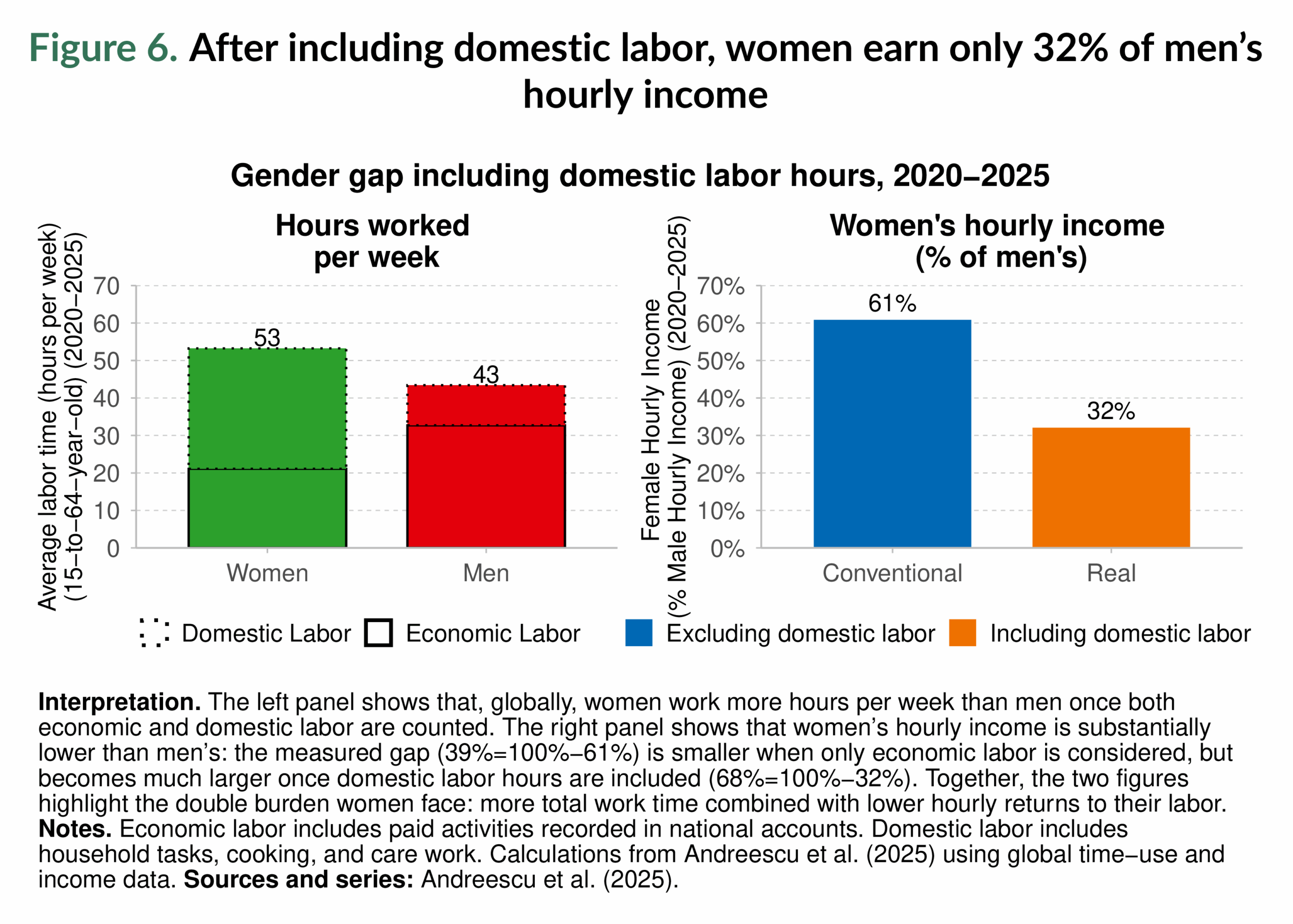
The report breaks down where the inequalities are most stark, and gender inequality is persistent. Women continue to earn less than men. Despite working more hours a week (including domestic work) women earn only 61% of men’s hourly income. Women work more to earn less.
This structural injustice affects half the global population and demonstrates the unfairness within global systems.
3. The wealthiest 1% contribute the most to carbon emissions
Unsurprisingly, the poorest in the world are not responsible for the majority of carbon emissions. The largest emitters are the wealthiest countries and the richest individuals within those countries.
The top 10% account for 77% of emissions. The wealthiest 1% alone account for 41% of private capital ownership emissions, almost double the amount of the entire bottom 90% combined.
The wealthiest countries emit the highest levels of pollutants, but will also have the most resources to adapt to the consequences of the climate disaster — which will further exacerbate inequality.
4. Global financial systems entrench inequality
People are right to rage against a global system that does generate inequality. Richer countries can borrow at cheaper rates because they are classed as “safe”, which enables them to lock in advantages over poorer countries.
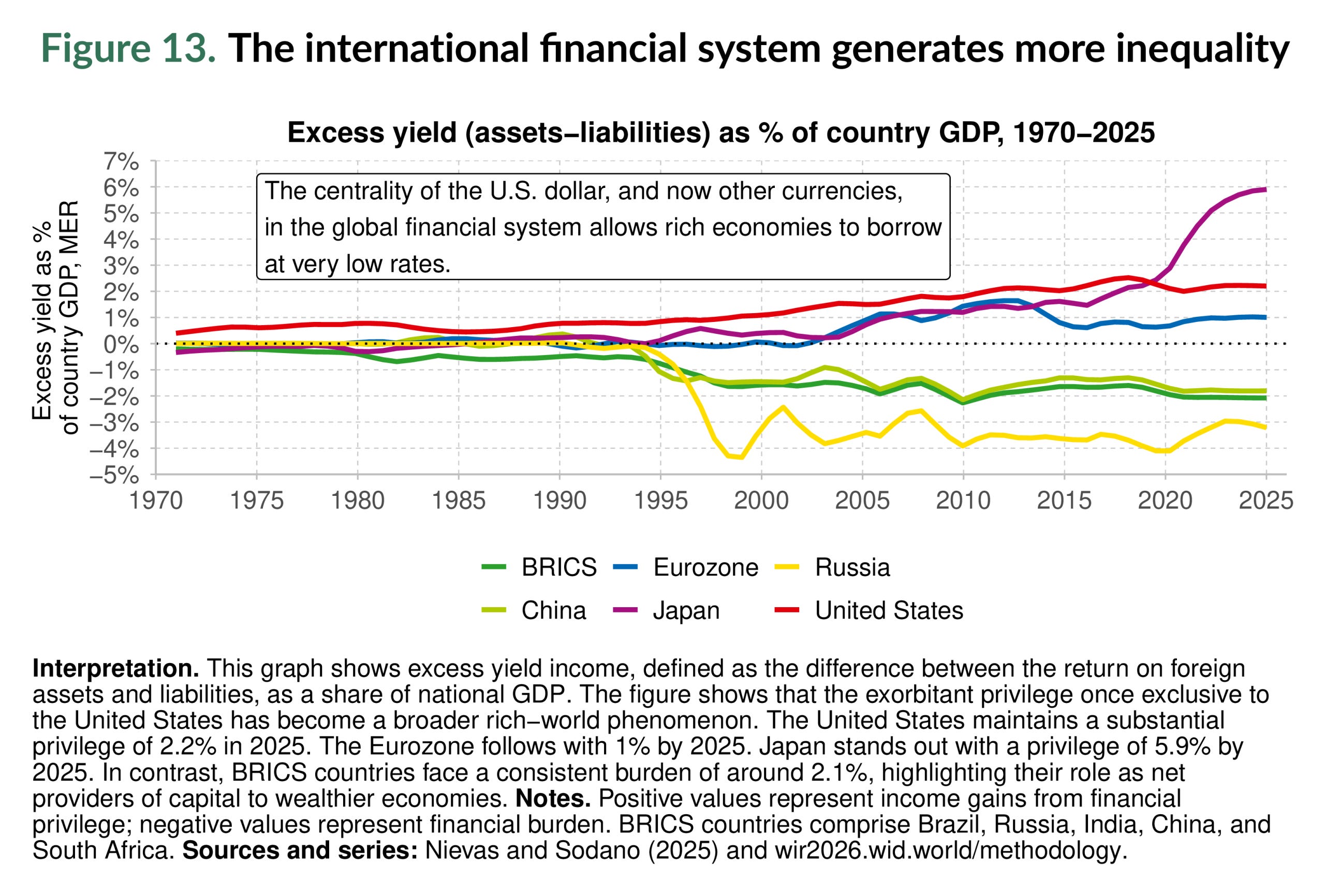
Developing countries are driven to transfer resources outward, constrained in their ability to invest in education, healthcare, and infrastructure. This dynamic not only entrenches global inequality but also increases inequality within nations, as fiscal space for inclusive development is eroded.
With developing countries unable to compete for limited resources, populations can become disaffected with politics which erodes trust and hope that democracies can deliver change.
5. Is there any answer?
The report suggests that public investment and redistribution are key policies that can reduce inequality:
One important avenue is through public investments in education and health. These are among the most powerful equalizers, yet access to these basic services remains uneven and stratified. Public investment in free, high-quality schools, universal healthcare, childcare, and nutrition programs can reduce early-life disparities and foster lifelong learning opportunities. By ensuring that talent and effort, rather than background, determine life chances, such investments build more inclusive and resilient societies.
Another path is through redistributive programs. Cash transfers, pensions, unemployment benefits, and targeted support for vulnerable households can directly shift resources from the top to the bottom of the distribution. Where well designed, such measures have narrowed income gaps, strengthened social cohesion, and provided buffers against shocks, especially in regions with weaker welfare states.
If we heed this advice, then the future is bright. We are the 99%, we can demand change, we have the power, we have the numbers. If wealth inequality divides, then wealth equality can unite us.
Conclusion
Wealth inequality is unsustainable and if we do not make a political decision to tackle it, our living conditions will continue to erode until collapse. We need to force our governments to take action in reversing this trend and rebuild our living conditions.
The report’s conclusion has an excellent summation of the stakes.
Inequality is a political choice. It is the result of our policies, institutions, and governance structures. The costs of escalating inequality are clear: widening divides, fragile democracies, and a climate crisis borne most heavily by those least responsible. But the possibilities of reform are equally clear. Where redistribution is strong, taxation is fair, and social investment is prioritized, inequality narrows.
The tools exist. The challenge is political will. The choices we make in the coming years will determine whether the global economy continues down a path of extreme concentration or moves toward shared prosperity.
It’s not just political will. It’s your will. Will you act, or will you not?