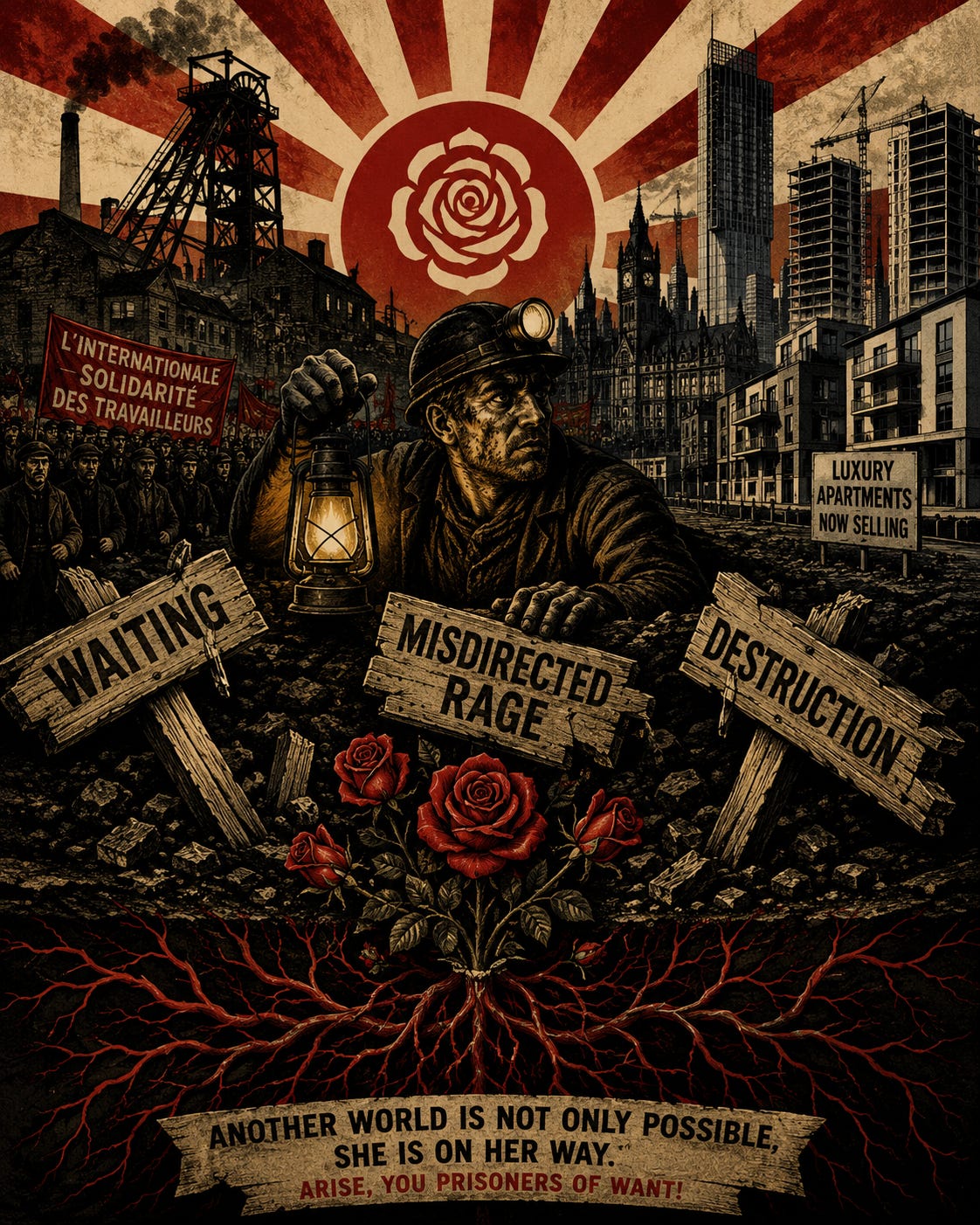
Émile Zola’s Germinal is a Timeless Masterpiece
How a 19th century book can teach us about the modern labour movement
Émile Zola’s Germinal is a classic of European literature and an essential book for understanding how the plight of workers is as pertinent now as it was in the late 19th century.
Although the French miners of Zola’s Germinal live and work in conditions far worse than most of us can imagine, their fight to improve their lives is remarkably similar to ours.
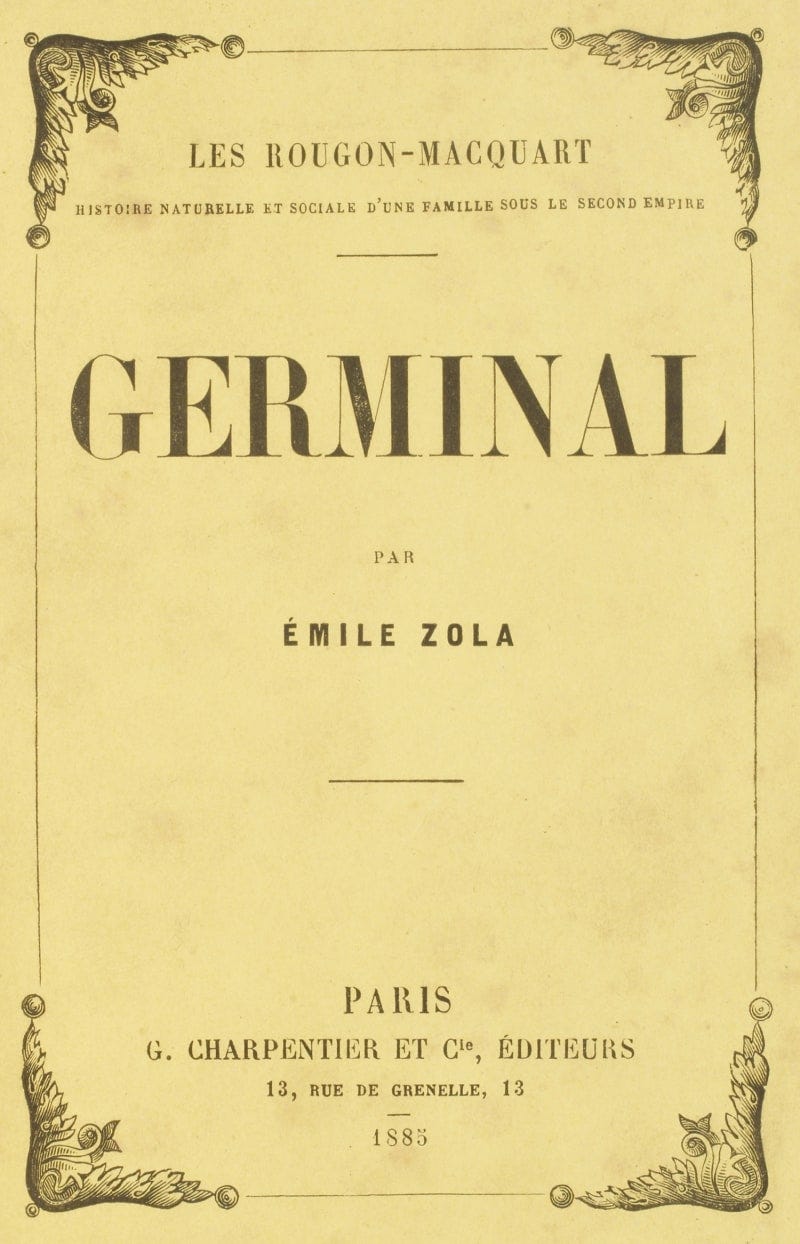
Published in 1885, Germinal follows Étienne Lantier, an unemployed mechanic who drifts into a northern French mining community, finds work underground, falls in with the miners’ growing discontent, and eventually leads them into a strike that destroys mines and miners alike. It’s a sad book. Zola doesn’t romanticise poverty or sanitise the violence that erupts when people are pushed far enough. Nor does it have a happy ending or clear resolutions, but beneath the brutality, there’s a political argument running that can teach us a lot.
There are three lessons in particular that I got from the book that apply to the modern working-class:
1. Nobody is coming to save you
Étienne become convinced in that the International (the nascent workers’ organisation that was supposed to be weaving together the struggles of labourers across Europe into something unified and powerful) would come to the rescue of the striking miners. The miners listen and are eventually persuaded to become members.
Yet, once the strike drags on, the International essentially does nothing. The miners run out of their fighting fund and begin to starve, and no meaningful support materialises. I don’t think Zola is making a cynical argument here. He’s not saying organisation is pointless. He’s saying that outsourcing your hope to a distant structure, however well-intentioned, is a way of rejecting our own responsibility. The cavalry isn’t coming. Whatever is going to change will change because the people most affected by the problem build the power to change it themselves.
This is, I think, the first and most uncomfortable lesson of Germinal: not that solidarity is a lie, but that relying on external solidarity will not win the day. Support for a movement will always be important, but it cannot be substituted for the movement itself.
2. Know who you’re actually fighting
The most politically sophisticated thing Zola does in Germinal is show us how easy it is to point your rage in the wrong direction, and how costly that mistake is.
The miners have no shortage of reasons to be angry. They’re angry about the poor conditions of their work, the local manager who doesn’t have sympathy for their issues, their neighbours who gossip, the shopkeeper who exploits their debt. This makes it difficult for them to know where to channel their anger. Eventually, their rage is directed towards the mines. Since the miners cannot identify the shareholders who own the mines, seeing them as opaque, distant, and removed from reality, the physical mines themselves become the manifestations of ‘The Company’. However, this is a disaster for the miners because they destroy the very capital they need for work.
Zola does provide the stakeholder with a face, in the form of the Grégoire family. The family genuinely believe they have earned their dividends through the prudent investments of an earlier generation. They infantilise the workers and treat them as lesser humans. However, because they are detached from the workings of the mine itself, the workers don’t recognise the insidious nature of the family. They simply benefit, quietly and completely, from a system that grinds and exploits other people, whilst they live lives of leisure.
Unable to directly confront the real stakeholders and thus negotiate effectively, the strike eventually turns violent. The shopkeeper who exploited the workers for so long is killed and his body mutilated in a distressing scene. This achieves nothing since the shop keeper is himself a worker. Although slightly higher in the hierarchy than the miners, he was simply another cog in the machine.
Ultimately the enemy is not the manager who delivers the bad news. It’s not the shopkeeper who charges too much. It is the system and stakeholders who enforce dreadful conditions on the workers while extracting all the profit for themselves. This is not a comfortable lesson because structures and the stakeholders who own and control them are harder to hate than those who work to maintain them, but movements that hate the wrong people tend to exhaust themselves without ever threatening the correct targets or achieving any gains.
3. Formulate your method
The strike in Germinal fails. Zola makes sure we understand why, and the answer is not simply that the bosses were too powerful. The demands, the methods, and the leadership were unclear. The tactics oscillated from peaceful striking, which was politely ignored, to explosive violence, which eventually led to destruction, loss of life, and soldiers shooting striking miners.
Since the workers were unable to articulate exactly who their enemies were, and held out hope for an external force to save them, they were unable to formulate effective methods. Destroying the mines was of no benefit to the workers because they needed the mines for work. What was essential was that they renegotiated the terms of their work, or simply took ownership of them.
As an ex-miner who had previously experienced strike action, the character of Rasseneur provides the most realistic programme of change. He suggests negotiating with the bosses and securing gradual improvements to their conditions, but he is ignored because he is no longer personally invested in the movement and vainly wishes to lead the workers.
Zola never tells us what the correct methods would be, and it would be to reduce the complexity of nuance that he creates throughout the book to suggest there would have been a perfect method. But there are sliding door moments which decide the success of the movement. For instance, when the workers meet with the manager to demand better conditions, they were close to successfully forcing the manager to yield concessions, only to relent when he mentions ‘The Company’ and ‘The Board’. These parties appear nebulous and godlike to the workers and they fail to get the names and locations of exactly who the stakeholders are. What they didn’t realise is that the owners of the Mining Company were just people, and these people can be pressured.
We see the same issues today. When we don’t identify those responsible for our declining conditions, then how can we formulate how to engage with them? This isn’t about blaming one person, but it is about knowing where to apply pressure. Even if we don’t fully understand all the stakeholders, it is important to identify at least some of the correct targets.
4. The consequences of failure
Zola shows us that the repeated failure of the workers will lead to nihilism and anarchism. Souvarine, the novel’s most extreme character, is a committed anarchist who believes that the only honest response to an unjust system is its total destruction. He ultimately sabotages the mine, causing it to flood and kill many of the miners who return to work after the failed strike. This kills the very people he wants to liberate, and Zola is likely correct to insinuate that the greatest suffering created from the violent sabotage of capital will be borne by workers.
Germinal is nearly 140 years old. The mines it recreates are mostly closed and the International it references collapsed not long after Zola published his novel. And yet the three failures Zola diagnoses are relevant today. That’s what makes the book feel less like history and more like a warning that keeps getting ignored. No one will fix our conditions for us, we need to identify who is responsible for our declining living conditions, and we need to develop the correct methods for engaging with them.
Zola couldn’t tell us what to do. But he was very clear about what not to do. That’s not nothing. Sometimes it’s everything.